Monday, January 18, 2016

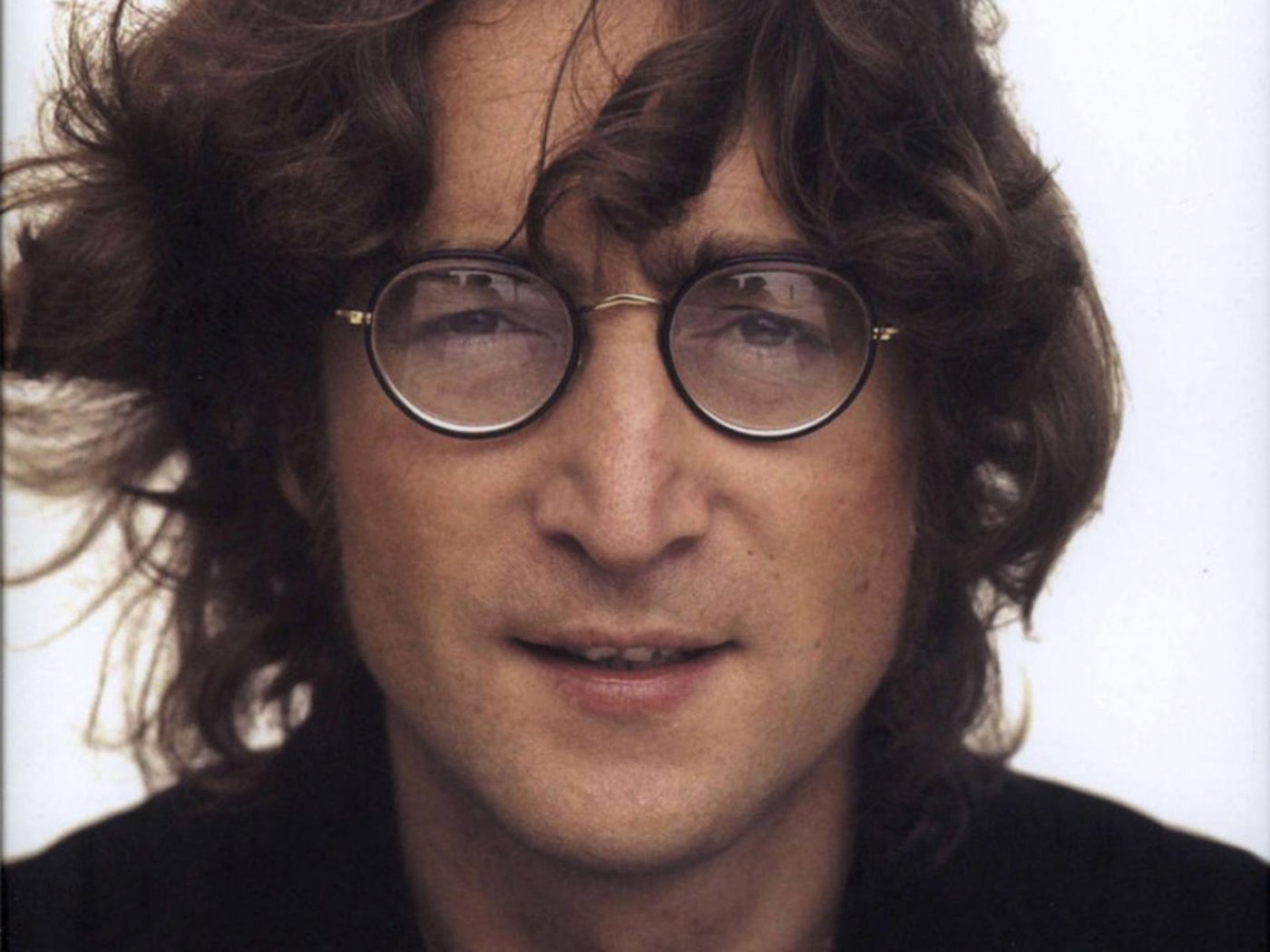
If You’re Only Going to Buy One Greatest Hits Set From… John Lennon


I figure I’ll review all four members of The Beatles individually, and then I’ll look at them as a group.

And yes, I remember John Lennon’s death as if it were yesterday.  But it took me years to buy a solo album (by 1983, the people who had been buying Double Fantasy in the weeks after his death were dumping it on used record stores), and seven more years to buy a greatest hits set.  Don’t wait that long – his solo career had its peaks and valleys and ended much too soon, but it’s still worth exploring.

Unfortunately, Capitol Records – or I guess now Universal Music Group, my favorite whipping boy among the major labels – has decided only one one-disk set should be available for download, and it’s really not that good (more on that later).  So, I’m going to say let’s spend a little more money here - Lennon's music is worth it.


I hate recommending a four-disk box set, but it’s a four-disk box set at $29.99 for the download on iTunes ($28.49 on Amazon), and the physical box is $30.00 on Amazon.  That’s a pretty good price – you’re (almost) never going to find Lennon’s solo stuff cheaply.

This one is divided into four sections:  “Working Class Hero” (political stuff, or anything with a message – everything from “Imagine” to “Give Peace a Chance” to “Steel and Glass,” his diatribe against former Beatles manager Allen Klein, is there), “Woman” (songs relating to women, mostly love songs but also some of his music about his late mother, Julia), “Borrowed Time” (everything else), and “Roots” (oldies from the 1960s and before; his 1975 album Rock ‘n’ Roll is here in its entirety, along with some live cuts).  For some fans, this may be the only Lennon purchase they need make.

Other Lennon hits sets through the years (the links go to Wikipedia):

Shaved Fish (1975) – this was the only Lennon hits set for quite some time, and it’s apparently still around on vinyl if you’re a collector.  Twelve songs, mostly hits; only Rock ‘n’ Roll isn’t represented.  “Happy Xmas (War Is Over),” “Give Peace a Chance,” and “Instant Karma!” made their first appearances on LP here, although if you wanted a full version of “Give Peace a Chance,” you’re out of luck (two partials instead).

The John Lennon Collection (1982) – if this was still in print, this would definitely get my recommendation.  17 songs when originally released on vinyl (19 on the 1989 CD re-release), and six of the seven songs from Double Fantasy are included, since it was released on Geffen Records, rather than Capitol.  (Lennon switched to Geffen for Double Fantasy, and David Geffen managed to license eleven songs from Capitol for this.  All of Lennon’s music was reacquired by Capitol in 1989, so the CD was issued by them.)  Unfortunately, now out of print, even though it’s actually neck-and-neck with Double Fantasy for his biggest seller in the States.

Menlove Ave. (1986) – outtakes from two of his 1970s albums; not a greatest hits set.  Out of print.

Imagine: John Lennon (1988) – isn’t technically a greatest hits set and isn’t available for download, but is probably worth hunting down (although at $19.99 for a single disk, it’s an indulgence – it was originally two disks on vinyl).  It’s actually a soundtrack from a documentary, and is the only Lennon solo release to mix Beatles recordings and solo work (the foursome usually did a good job of avoiding that).  “Real Love” is also here, which Paul, George, and Ringo either missed or ignored when they added their voices and instrumentation to it a few years later for Anthology 2.

Lennon (1990) – the first of many Lennon box sets; this was given to me in 1993, and I’m grateful, mostly because almost all of his studio albums are included here (all of John Lennon/Plastic Ono Band, nine of ten songs from Imagine, nine of twelve songs from Walls and Bridges, all of John’s songs from both Double Fantasy and Milk and Honey).  This was a not-uncommon trend for the first few box sets of the CD era (both Steely Dan and The Police released box sets with all of their studio albums included), but as record labels realized doing this meant collectors didn’t need to buy anything after that, the practice came to an abrupt halt.  Out of print, of course.

Lennon Legend: The Very Best of John Lennon (1997) – this basically replaced The John Lennon Collection in order to add “Nobody Told Me” from Milk and Honey.  Out of chronological order, which bugs the crap out of me, but that’s my issue.  Not available for download, but it’s still in print on CD – although $18.86 for a one-disk product is pretty pricey.

John Lennon Anthology (1998) – this replaced the Lennon box.  Not really a hits set; this has lots of outtakes and studio chatter, which makes it interesting, but not a necessity to the casual listener.  Also out of print.  Wonsaponatime, also from 1988, is a one-disk distillation of the same box set, and focuses more on the actual music.

Instant Karma: All-Time Greatest Hits (2001) – I had seen this around a couple of times, and figured it wasn’t necessarily authorized.  I guess it was; the intention was to sell it at Sam’s Club and Costco as a low-end “box” set, and looks like it.  The mastering apparently ain’t great.  Out of print.

Acoustic (2004) – Lennon unplugged, I guess.  Not a greatest hits set (although listenable).  Still technically in print, although I think it’ll be gone soon, given it’s going for $23.77 on Amazon.

Working Class Hero: The Definitive John Lennon (2005) – if one disk is too little and four are too many, why not try two disks?  This seems to cover all the bases.  Out of print in the US, but available on Amazon as an import, with a $16.35 list price, thus justifying its title.  I’d get this before any of the one-disk hits sets listed below, and if you’re okay with physical disks, this would probably be a better buy than Gimme Some Truth.

The U.S. vs. John Lennon (2006) – not a greatest hits set; this is a soundtrack of the documentary film of the same name, about when the Nixon Administration thought it would be a good idea to get John and Yoko out of the country.  That worked well.  At $11.38 for the CD on Amazon (no download available) it’s a great purchase, but only two songs from after 1972 are included (“Nobody Told Me” and “Scared”).

Remember (2006) – One-disk set sold only at Starbucks, now out of print.

Signature Box (2010) – This was a big year for Lennon reissues to celebrate his 70th birthday; this eleven-disk set accumulates all of his remastered studio albums, plus a disk of singles that weren’t released on albums (“Cold Turkey,” “Power to the People,” etc.), and another disk of outtakes/home tapes.  There are a couple of problems here, however:  two live albums aren’t here (Live Peace in Toronto and Live in New York City).  Nor is the stripped-down version of Double Fantasy – Lennon’s voice is single-tracked on that version for the first time in forever, and the instrumentation is pared down to the minimum; if you want that, you have to buy the (reasonably priced) two-disk studio album separately.  (Some collectors are complaining that Two Virgins and Life With the Lions, a couple of avant-garde disks John and Yoko did in the late 1960s, aren’t here either, but I don’t think that’s a minus.)  The other issue is this puppy is expensive; it’s $79.99 on iTunes and $75.99 on Amazon to download (although Amazon at least has the outtakes/home tapes songs available for download individually – now that I’ve said this, they’ll probably block them), and an astonishing $139.45 to buy the physical box set.  Only for the absolutely, positively obsessed.

Power to the People: The Hits (2010) – or you can buy this one-disk, 15-song, 57-minute (CDs hold 80 minutes of music), ironically-titled disk instead for $13.99 on Amazon.  (And apparently the #5 “Nobody Told Me” didn’t qualify as a hit; it’s not here.)  At least it’s $9.49 for the download ($9.99 on iTunes).  Why is The John Lennon Collection out of print, again?

Icon: John Lennon (2014) – well, you knew this would be coming once UMG got hold of the catalog.  One disk, 11 songs, seven bucks, no downloads. And, as usual for UMG, oddly selected:  the top ten hits “Whatever Gets You Thru the Night,” “#9 Dream,” “Woman,” and “Nobody Told Me” aren’t here, but nonsingles “Jealous Guy,” “Beautiful Boy (Darling Boy),” and “Love” are represented.  Buy it if you’ve run out of other CDs during a long trip.


Friday, January 15, 2016

Superhits 1980-1984, Part 2


 More hits from the first half of the 1980s.


 “Rock With You,” Michael Jackson, #1, 1/19/80
Second hit from Jackson’s breakthrough solo album Off the Wall (he made four solo albums with Motown in the early 1970s, but to put it a little unkindly, they weren’t very good).  To me, this song was a breakthrough as well (even though it was written by Rod Temperton, rather than Jackson himself).  “Don’t Stop Till You Get Enough” seemed a little gimmicky to me, especially given the falsetto throughout; this served as a good radio hit and could be played in clubs as well.  Jackson had definitely arrived as a solo performer, which completely changed the dynamic within the family’s main act, The Jacksons.


“We Don’t Talk Anymore,” Cliff Richard, #7, 1/19/80
On the other hand, Cliff Richard’s first hit in Great Britain, “Move It,” was released on August 29, 1958 – the same day Michael Jackson was born.  Sir Cliff has been a huge star in the UK for over a half century, with over 130 top 20 disks between the singles, album, and EP charts – but in America, not so much (up until this point, his only top 20 was the 1976 hit “Devil Woman”).  This song changed the game a bit.  A bit of synthpop (the synthesizer dominated the song, as opposed to guitars), the cheery melody was a stark contrast to the lyric about the end of a relationship, and the singer’s denial of same (“But I ain’t losing sleep/I ain’t counting sheep”).  Added as an afterthought to his UK release Rock ‘n’ Roll Juvenile, the song became the title track for the US version, and heralded a period where Richard put nine songs in the Billboard Hot 100 between 1980 and 1983.


“Cool Change,” Little River Band, #10, 1/19/80
A song about getting away from your troubles by getting in your boat and going out on the water – one of two 1980 songs on the theme (although I’m pretty sure Christopher Cross had already recorded his song “Sailing” by the time this one hit the charts).  Second top 10 hit from the band’s album First Under the Wire, and their fourth one overall in the United States to this point.  Written by lead singer Glenn Shorrock – or, I should say, former lead singer (as some of you may know, the group traveling under the name Little River Band today features precisely zero people who played on this song).


“Better Love Next Time,” Dr. Hook, #12, 1/19/80
Dr. Hook and the Medicine Show arrived with a bang in the early 1970s, mainly riding on the material of songwriter, humorist, and children’s book writer Shel Silverstein (“Sylvia’s Mother,” “The Cover of The Rolling Stone,” etc.).  But by the mid-1970s, he’d stopped writing songs – which left Dr. Hook (their new, shortened name) at the mercy of whoever produced the band, since there were no songwriters in the group.  As a result, their later output, while hitting higher positions on the singles charts (the two aforementioned songs were their only top 40 hits during the first era) were all by outside anonymous songwriters or remakes – and, to put it less kindly, were the typical soft rock pap you’d think this band would have made fun of early on.  “Better Love Next Time” is a good example – nothing special, written by three outside songwriters, missed the top 10 in the U.S. pop chart but made it in the U.K. (and hit #3 on the adult contemporary chart here in the States, their best showing ever).  Next.


“Jane,” Jefferson Starship, #14, 1/19/80
On the other hand, “Jane” shows the Jefferson Starship (temporarily) making a move to the other direction.  Their big hits over the previous few years – “Miracles,” “With Your Love,” “Count On Me,” and “Runaway” – were all ballads/midtempo songs written for lead singer Marty Balin.  (Balin wrote the first two; outside songwriters submitted the others.)  But by 1979, Balin was gone (and so was Grace Slick, although she would return in 1981), so with new lead singer Mickey Thomas on board, the band moved back into rock – which is where it had been for a long time under the original name Jefferson Airplane, as well as the early Starship days before Balin came back.  “Jane” is nothing special, but it showed that the band hadn’t forgotten how to rock – and as a result, it’s still played on classic rock stations (perhaps the only Jefferson Starship song you’ll hear in that format).  Grace Slick is in this video, so it must have been recorded after 1981.


 “Rotation,” Herb Alpert, #30, 1/19/80
“Rise” was a pleasant surprise for Herb Alpert; it was his first top 40 single in 12 years – in fact, the song hit #1 (with a lot of help from its placement in General Hospital, where it was used during a scene showing Luke Spencer raping seducing doing something with Laura Webber.  (It seems repugnant that the show would ever have called the scene a seduction, but I really don’t have the time to delve into the program’s history.)  In any case, “Rotation” was the followup single, and not dissimilar in sound – a light disco beat and Alpert’s lead trumpet lines.  It didn’t do anywhere near as well as “Rise,” but a top 30 single is nothing to sneeze at.  All of which meant Alpert would have additional duties at his record label beside overseeing the entire operation.


“She’s in Love With You,” Suzi Quatro, #41, 1/19/80
I’ve never quite figured out why Suzi Quatro didn’t make it bigger in the United States – which, of course, is her home country.  She was a much bigger star in the United Kingdom (this was her tenth Top 40 hit there), she’d just had a huge duet hit with “Stumblin’ In,” and her recurring role as Leather Tuscadero on Happy Days certainly made her better known to the public.  (It might have helped if she’d actually been able to perform her own songs on the show, but they didn’t really fit the format.)  However, “She’s in Love With You” was the second of three consecutive singles to just miss being played on Casey Kasem’s American Top 40, all peaking between #41 and #45.


“Money,” The Flying Lizards, #50, 1/19/80
Another song that became a top 40 hit in ten countries, but not the United States.  This was The Flying Lizards’ one major hit single (they did notch a second chart hit in the UK), and it may be the best known of the various versions of “Money,” with a unique reading from lead singer Deborah Evans (although the group was primarily David Cunningham’s creation).  The song’s highest chart performance was the #16 version by The Kingsmen, although Barrett Strong’s original version hit #23, and The Beatles’ version certainly has many fans as well.


“Dirty Water,” The Inmates, #51, 1/19/80
A second revival of a 1960s American hit by a contemporary British band, although The Inmates were more of a pub rock group.  The original, by California-based band The Standells (although the song is specifically based in Boston), hit #11 in 1966; this version moved the location to London (and switched the Charles River for the Thames).  The Inmates probably helped themselves by distributing promo versions to radio stations across the United States, substituting local markets and rivers near them.  This was their one and only American hit, but they’re still extent and playing in the UK (although they might want to update their MySpace and record label pages).

“Stargazer,” Peter Brown, #59, 1/19/80
Fifth and final chart hit for the singer-songwriter, who recorded with TK Records (KC & The Sunshine Band’s label), but came from the Chicago suburb of Palos Heights.  After his recording career ended, he still kept writing (he’s currently collecting royalties thanks to his cowrite on Madonna’s “Material Girl”), but tinnitus ended his music career.  He’s now working full time in design and architecture.  The one video I found for this song couldn't be embedded; click here for the link.


“Star,” Earth, Wind & Fire, #64, 1/19/80
Perfectly good EWF single, the fourth from their album I Am, that probably didn’t chart higher because radio and record buying might have had enough for awhile.  (From February 1978 to September 1979 Earth, Wind & Fire put six singles in the top 40, four of which made top 10.)  There also might have been a little confusion with their earlier hit “Shining Star,” for that matter.  Cowritten by Allee Willis, who has written lots of songs you’ve heard over and over again – “September” and “Boogie Wonderland” for EWF, “Neutron Dance” for The Pointer Sisters, “What Have I Done to Deserve This?” for the Pet Shop Boys and Dusty Springfield, and “I’ll Be There for You,” the theme from Friends.


“Volcano,” Jimmy Buffett, #64, 1/19/80
One of “The Big Eight” – eight songs you will almost always hear at a Jimmy Buffett concert.  (The others are “A Pirate Looks at Forty,” “Changes in Latitudes, Changes in Attitudes,” “Cheeseburger in Paradise,” “Come Monday,” “Fins,” “Margaritaville,” and “Why Don’t We Get Drunk [And Screw]” – although the latter has been modified somewhat over the years.)  Second single from the album of the same name, this album was his first release for MCA Records; the label had folded up ABC Records, Buffett’s longtime label, in mid-1979 after purchasing it earlier that year.  23rd Street was always on my way.


Sunday, January 3, 2016

Superhits 1980-1984, Part 1


I’ve had some false starts on these things before, but why not try again?


“Please Don’t Go,” KC & The Sunshine Band, #1, 1/5/80
The first #1 hit of the 1980s, this replaced Rupert Holmes’ monster “Escape (The Pina Colada Song)” for a week, only to be replaced by the same song the following week.  Notable primarily for being the band’s first ballad after a string of disco tunes.  They’d had five songs hit #1 or #2 between 1975 and 1977, but for two years after that couldn’t hit the side of a barn – the best they could do was “Boogie Shoes” and a remake of The Four Tops’ “It’s the Same Old Song,” both of which made #35.  (It probably didn’t help that they gave away the pulsating “Dance Across the Floor” to Jimmy “Bo” Horne, who managed to hit #38 – who knows how well these guys might have done with it?)  so they tried a new approach.  And it worked – this is a syrupy ballad, not atypical of the disco hangover era.  While KC (real name Harry Casey) charted himself in a duet with Teri DeSario twice in 1980, this would be the last band chart hit (although 1984’s “Give It Up,” while listed under just KC, is actually a full KC & The Sunshine Band production).


“Move Your Boogie Body,” The Bar-Kays, #57, 1/5/80
Seventh of nine hits for this band stretching between stretching between 1967 (“Soul Finger”) and 1984 (“Freakshow on the Dance Floor”).  Some people will know them for either of their two biggest hits, “Soul Finger” or 1977’s “Shake Your Rump to the Funk” (were these guys fixated on female body parts or what?), while others will hear the name and say, “Oh, that’s the band that was in the airplane with Otis Redding.”  And they were; four of the six original members of the band died along with Redding and his manager on December 10, 1967, when their plane crashed into Lake Monona, Wisconsin.  Trumpeter Ben Cauley survived the crash, while bassist James Alexander was on a different plane; the two of them rebuilt the group and carried on.


“Ladies’ Night,” Kool & The Gang, #8, 1/12/80
This marks the second part of Kool & The Gang’s career.  Part one ran for ten albums from 1969 to 1978, in which time they rang up 13 Top 40 hits, including two top tens in “Jungle Boogie” and “Hollywood Swinging.”  But they hadn’t had a Hot 100 hit in three years, and their 1978 album Everybody’s Dancin’ didn’t crack the top 200 on the album charts.  Give the band credit for trying something new:  they brought in a new producer, Eumir Deodato, and a new lead singer, James “J.T.” Taylor (the “J.T.” added to avoid being mistaken for that other guy with the same name).  “Ladies’ Night” was the first single from the album of the same name, and it sizzles; when 50 percent of the people in the club want to dance to it, it’s going to be a hit.


“Chiquitita,” Abba, #29, 1/12/80
Fourth chart hit for Abba off their 1979 Voulez-Vous, although this was only the second one to make the American Top 40.  This made #1 in 13 other countries, however, possibly for reasons not necessarily attributable to the song’s quality:  Abba donated half of the song’s royalties to the United Nations Children's Fund (UNICEF – remember those orange boxes you carried with you at Halloween years ago?).  The song actually debuted at a concert in January 1979, which was broadcast all over the world.  Abba is still donating half of their royalties to UNICEF, in case you’re feeling charitable at the same time you’re downloading music.  This is the version shown at the UNICEF concert; the late Gilda Radner introduces them.


“Savannah Nights,” Tom Johnston, #34, 1/12/80
This chugging danceable rocker was the one and only solo hit for the once and future lead singer of The Doobie Brothers – it’s the same guy who sang “Listen to the Music” and “China Grove,” among others.  Johnston had been on the sidelines for a couple years after having multiple health issues (mostly stemming from stomach ulcers), and by the time he was ready to assume a more full-time role, the band’s sound had changed to that of his replacement, Michael McDonald.  Johnston left on good terms (even during the years when the band was officially inactive, various members would reunite for charity events, and they have an open-door policy toward former Doobs making guest appearances), and his first solo album was helped by riding the wave created by their hit album Minute by Minute.  Subsequent albums didn’t perform as well, however, but don’t fret – Johnston and Patrick Simmons revived The Doobie Brothers as an ongoing entity in 1989, and will be touring again this year starting in May.  Further, Johnston placed a song he wrote, “Where Are You Tonight?” on the 1987 Dirty Dancing soundtrack, which at last report was one of the top 20 selling albums of all time worldwide, so he’s still making a few bucks in his old age.


“Rapper’s Delight,” Sugarhill Gang, #36, 1/12/80
The first rap song to hit any chart, and the first to gain traction in popular culture.  The origin of the song came when Blondie, Chic, and The Clash did a concert together at New York’s Palladium (that must have been a blast), and rapper Fab 5 Freddy and the Sugarhill Gang members ("Big Bank Hank" Jackson, Mike Wright, and "Master Gee" O'Brien) jumped on the stage and started freestyling during Chic’s “Good Times.”  Sugarhill Gang cut the song within weeks (Chic’s Nile Rodgers heard an early version of the song in a club, which resulted in a lawsuit and a shared songwriting credit; Rodgers has been effusive in his praise of the song since), but Americans could only find a 12-inch “disco” single; a 7-inch (regular) single was never commercially released.  (I don’t there was much airplay for the song either; its chart standing in the States was pretty much based off sales.)  #36 in the US, but #1 in Canada – go figure.


“I’d Rather Leave While I’m in Love,” Rita Coolidge, #38, 1/12/80
Second chart hit from Coolidge’s 1979 album Satisfied (which was preceded by the albums Anytime… Anywhere and Love Me Again – do I detect a theme here?), this was a huge Adult Contemporary hit both in the U.S. and in Canada, and hit the Top 40 on the Country charts in both territories as well.  Melodic love song (as was the case with most of Coolidge’s material, including her remake of Jackie Wilson’s shouter “Higher and Higher”), written by Carole Bayer Sager and Peter Allen, who would have better luck in 1981 with the theme song from Arthur (“Best That You Can Do”).


“You’re Gonna Get What’s Coming,” Bonnie Raitt, #73, 1/12/80
Bonnie Raitt released nine albums for Warner Brothers between 1971 and 1986, but only two songs hit the Billboard singles charts – this and a 1977 remake of “Runaway.”  Hopes were high for its parent album, The Glow, as Raitt was coming off her most popular album with 1977’s Sweet Forgiveness and had just signed a new contract with Warner Brothers.  But it just didn’t happen, and Raitt was dropped by the label a few years later – her gigantic commercial success came in the early 1990s with Capitol Records.  She’s backed here by a treasure trove of Los Angeles-based musicians – Danny Kortchmar, Waddy Wachtel, Bill Payne, Rick Marotta, and J.D. Souther.  The song was written by Robert Palmer, and appeared on his 1978 album Double Fun.


“Make Believe It’s Your First Time,” Bobby Vinton, #78, 1/12/80
Yecch blech ptui.  Oh, sorry – Vinton’s 44th and final chart hit from his album Encore.  No matter what I think of his music, you’ve got to give him credit for his longevity – he started in 1962 with “Roses Are Red (My Love),” and kept hitting even after the British Invasion and well into the 1970s (including in 1975 with “My Melody of Love,” partially sung in Polish).  He’s due to perform a few concerts later this year at the age of 80.


“Let Me Sleep Alone,” Cugini, #88, 1/12/80
It looks like Scotti Brothers (an independent label distributed by Atlantic Records at the time) wanted to break Don Cugini as a solo artist – he’d co-written two songs for Leif Garrett’s 1979 album Same Goes for You, including the title track.  (This was back when working with Leif Garrett was a positive.)  But this song didn’t chart particularly well, and no album was issued, so except for a cowrite on the soundtrack to the 1987 movie He’s My Girl, that was pretty much it for Cugini.  Long out of print, obviously, and YouTube is making it impossible for me to embed the one video for the song properly, so here's the link:  https://youtu.be/I8jh4VG8piw